
Stop Managing Burnout.
Start Building Capacity.
Bespoke workplace training for organisations whose staff carry sustained emotional and cognitive load.
Delivered using the LUMEN method - a structured neuroscience informed approach that strengthens regulation, relational capacity, and positive emotional range in high-performing teams.
Previous Audiences




If you lead a team delivering care, crisis response, or complex human services, you already know:
Your people are capable.
They are committed.
They care deeply.
And they are tired.
Not a dramatic collapse.
But cumulative depletion.
Energy is low.
Morale fluctuates.
Team dynamics feel heavier.
Small tensions escalate faster.
People are functioning — but not flourishing.
You’ve likely already tried something.
A wellbeing webinar.
A self-care seminar.
An EAP reminder.
A policy refresh.

Compliance modules don’t solve this.
Policies don’t regulate nervous systems.
The Operational Cost of Ongoing Depletion
In high-demand health and human service teams, burnout rarely looks obvious. Often, it’s high-functioning.
When teams operate in chronic survival mode, performance narrows, connection thins, and burnout becomes culture.
Left unaddressed, persistent stress and burnout erodes effective team culture.
And culture drives:
Productivity
Retention
Client care quality
Sick leave patterns
EAP utilisation
Leadership load
Early, intelligent intervention protects all of the above.

Most workplace wellbeing programs focus on individual coping strategies - mindfulness sessions, resilience tips, or stress management workshops.
While useful, they rarely address the deeper system dynamics that drive burnout:
Chronic nervous system activation
Relational strain within teams,
And the gradual loss of meaning and enjoyment in work.
The LUMEN Method was developed to address this gap.
A New Standard in Workplace Wellbeing
A Structured Method for Restoring Team Capacity
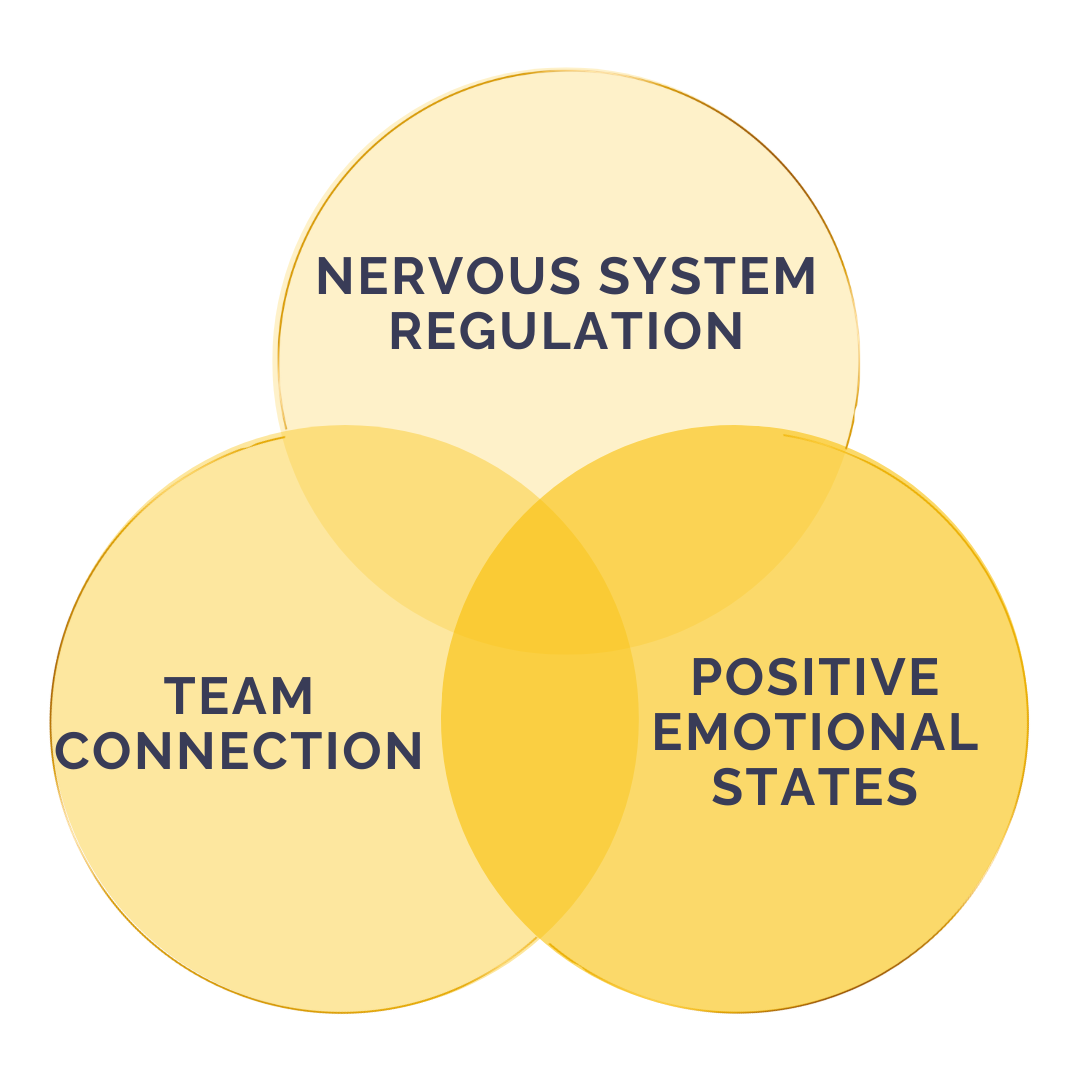
Rather than treating wellbeing as an individual responsibility, this approach works at the team and systems level, restoring three capacities that high-performing teams depend on:
Regulation – the nervous system foundation for clear thinking and sustainable performance
Connection – relational safety, communication, and trust within teams
Expansion – positive emotional states such as curiosity, creativity, and play that broaden thinking
The LUMEN Method
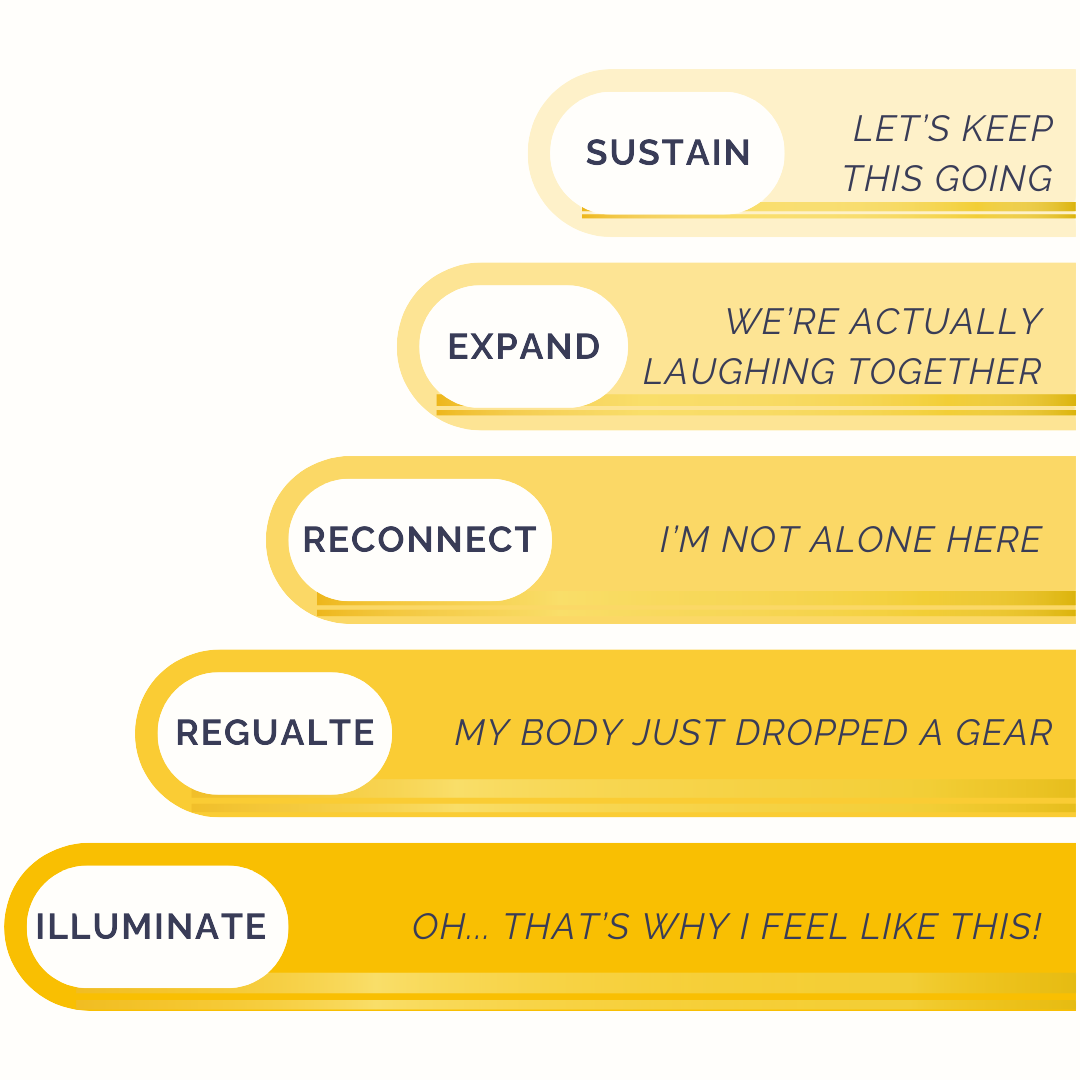
Sessions unfold through a five-stage intervention pathway, guiding teams from awareness of stress patterns through to sustainable wellbeing practices embedded in everyday work.
Illuminate: Build nervous system literacy and identify the patterns of stress and coping operating within the team.
Regulate: Apply practical, evidence-based strategies that help reduce chronic activation and restore baseline capacity.
Reconnect: Strengthen relational safety, communication, and trust within the team.
Expand: Activate play, curiosity, and positive emotional states that restore cognitive bandwidth, creativity, and collaboration.
Sustain: Embed practical strategies teams can integrate into daily work to maintain capacity and prevent burnout over time.
When these capacities are supported together, teams move out of survival mode and back into adaptive, collaborative functioning.
Designed for Professional, High-Responsibility Settings
This is an educational, skills-based workplace intervention — not therapy.
Sessions are:
Professionally facilitated by a Clinical Psychologist
Trauma-informed and psychologically structured
Appropriate for mixed teams and operational environments
Focused on practical skill development and applied insight
This work is particularly suited to organisations that:
Operate in health, crisis response, or complex human services
Have teams with complex or challenging dynamics
Want proactive, psychosocial risk-reduction
Value evidence-based, psychologically informed training
Emotional safety and professional boundaries are central to how every session is conducted.
This is sophisticated workplace education, delivered with precision.


What Happens in the Room?
The pathway moves teams from survival mode functioning to regulated,connected and sustainably engaged performance.
These states are accessed through carefully designed experiential activities that engage teams physically, socially, and cognitively.
Immediate Regulation
Participants visibly shift from vigilance to steadiness.
Breathing deepens.
Cognitive clarity improves.
Defensiveness lowers.
They leave with practical tools to manage stress responses in real time.
Connection & Cohesion
Teams communicate more openly.
Laughter reappears.
Cross-team conversations increase.
Relational capacity strengthens as team members feel seen and recognise commonalities.
A shared understanding emerges.
Restored Energy & Momentum
Playful, structured engagement expands emotional range.
Energy returns and creativity improves.
Problem-solving becomes less effortful.
Teams frequently request further sessions — not because it was entertaining, but because it was effective.

Play and Pleasure as Strategic Tools
This isn’t just having a bit of fun - fluff and distraction.
It’s about expanding the emotional and cognitive bandwidth of your team.
Through guided, skilful engagement with play, curiosity, and pleasure, participants:
Recalibrate nervous system responses
Restore attention, energy, and motivation
Strengthen creativity and problem-solving
Enhance collaboration and connection
Positive emotion is not an indulgence or reward after work — it is a regulatory mechanism that sustains performance.
Play and pleasure are neurophysiological tools that allows high performers to step out of chronic survival mode, regulate effectively, and bring full presence and capacity to their work.
Teams leave with practical strategies to integrate these moments into daily work.
Leveraging positive emotional states, play, and pleasure
to proactively reduce psychosocial risk
What Leaders Notice After a LUMEN Intervention
When teams understand how stress affects their nervous systems, relationships, and thinking patterns, meaningful shifts occur quickly.
Teams report:
• improved repertoire of in-the-moment strategies
• greater openness in conversations and team discussions
• renewed motivation and engagement with their work
• a stronger sense of connection and psychological safety
• rediscovering moments of enjoyment and humour at work
Leaders observe:
• more constructive communication during challenging conversations
• reduced tension and reactivity within the team
• improved collaboration and problem-solving
• a noticeable lift in team energy and morale
Over time, this supports:
More stable retention
Lower burnout-related absenteeism
Reduced reactive EAP utilisation
Sustained productivity in high-demand environments
This is not a motivational boost.
It is a capacity-restoration intervention grounded in the LUMEN Method.


Meet Mitzi
I partner with a select number of organisations each year to deliver bespoke, psychologically sophisticated interventions for teams working in sustained relational and emotional demand.
With over 20 years’ experience as a Clinical Psychologist in high-pressure systems, I bring clinical depth, operational understanding, and strategic clarity.
These are not generic burnout talks.
They are tailored, consultative sessions designed around your:
Service environment
Psychosocial risk profile
Leadership pressures
Team dynamics
Bring light, joy, and resilience back to your workplace.
Aligned with Psychosocial Safety Responsibilities
LUMEN directly supports organisational obligations by:
Addressing chronic stress as a psychosocial hazard
Strengthening psychological safety at team level
Increasing awareness of stress responses and coping patterns
Building practical skills that reduce long-term risk
Proactive prevention — not crisis management.
For Leaders Who Refuse to Normalise Exhaustion
If your team is still delivering — but running on empty —
now is the time for considered intervention.
High performance should feel expansive.
Not extractive.
Schedule a Confidential Consultation
If you are committed to excellence that energises rather than depletes, I invite you to schedule a strategic conversation.
Together, we will assess:
Your current pressures
Your team’s stress profile
The outcomes you are committed to protecting
Whether bespoke support is appropriate